Ujima. Collective Work
“Ultimate political authority and control should reside with the collective action of ordinary citizens challenging established power structures and ensuring governance serves the many, not the few.”
Citizen Led Change
Ujima is more than a principle—it’s a practice. The sections below highlight moments when ordinary people organized to challenge established power and pursue repair through public action. Alongside these examples, we also feature museums and other spaces —places that protect history and strengthen community memory—plus key documents and links that help track commitments over time. Consider this page a living resource: grounded in records, shaped by community, and expanding as the work grows.
Case Examples — community-led efforts (local, state, and school district) with milestones and documented outcomes
Places of Memory — museums and other spaces that protect history, memory, and cultural truth
Documents & Links — links, reports, presentations, and public records that ground the work in documentation
Case Example | Russell City, Hayward, CA
Hayward Community Services Commission
Community Efforts
Hayward Community Services Commission
On June 17, 2020, following the murder of George Floyd, the Hayward Community Services Commission (11 appointed residents) drafted a letter of support for the Racial Equity Action Plan and a call for further action by the City of Hayward in its commitment to anti-racism. The letter of support contained three attachments: 1) CSC commitments and intentions regarding the CSC’s work as a commission; 2) the Policy and enumerated Powers and Duties of the CSC per the Hayward Municipal Code; and 3) short, near, and long-term recommendations for addressing the City’s historical wrongdoings and complicity in institutional racism to the Council for consideration.
Listed as a short-term recommendation was for the current Council to issue an apology to the Black Community on behalf of the City for its complicity in institutional racism in the City of Hayward and for the destruction of Russell City. A CSC subcommittee was formed to prepare a draft apology in the form of a resolution. In conjunction with the resolution, the CSC subcommittee recommended 11 tangible action steps that the City should undertake to address the City’s historical wrongdoings and complicity in institutional racism.
In 2021, the Hayward City Council unanimously approved the apology, along with the short-term and long term recommendations of the CSC, which included establishing the Russell City Reparative Justice Project.
Summary
Russell City Reparative Justice Project Overview
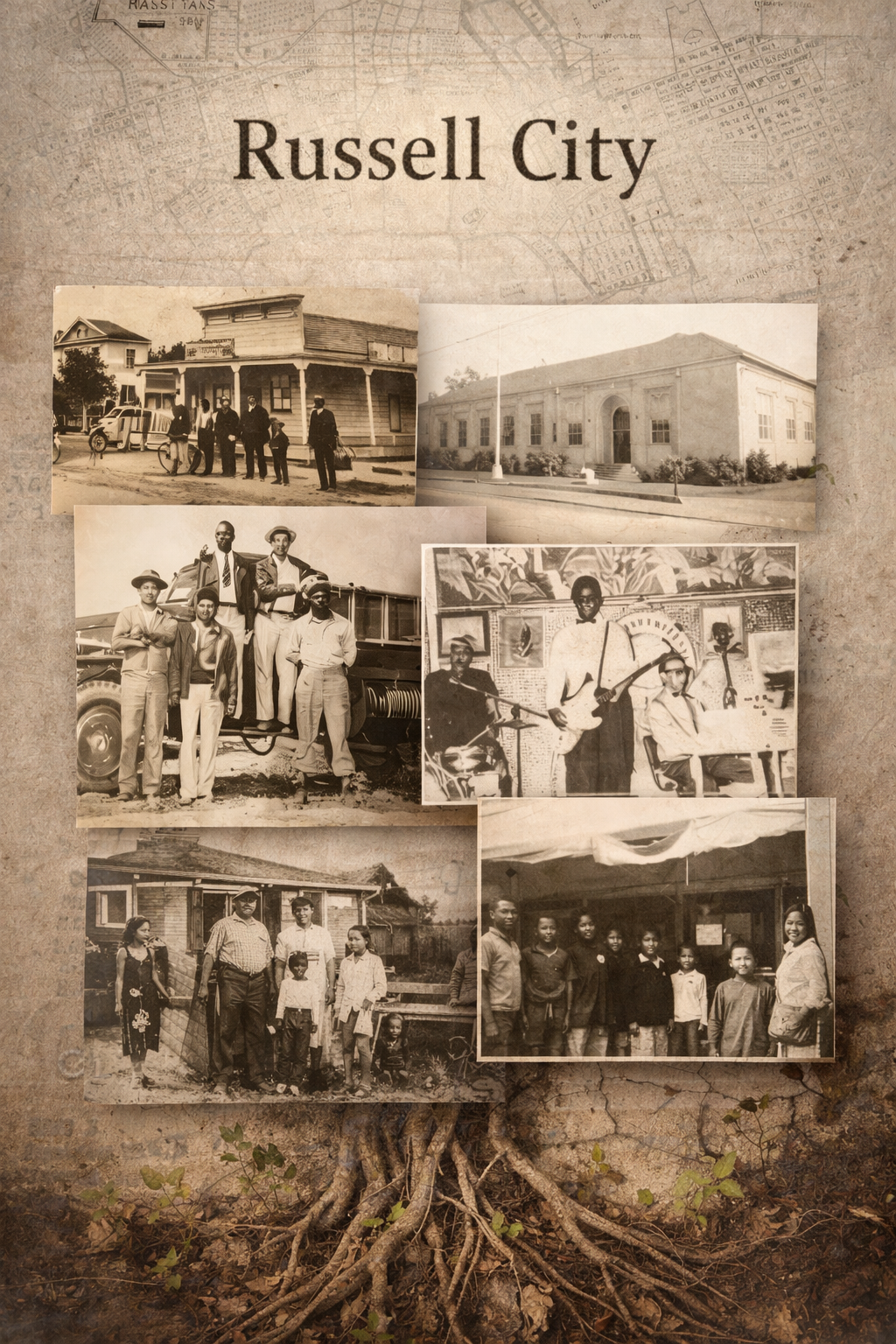
Established in 1853, Russell City was an unincorporated community near the Hayward shoreline that was ultimately annexed into the City of Hayward in 1964 as part of a redevelopment plan that relocated residents and businesses and rezoned the area for commercial and industrial use. Following the City’s formal apology on November 16, 2021, Hayward launched the Russell City Reparative Justice Project in June 2022 as a four-phase effort that combined academic research, community storytelling, and proposal development—leading to City Council action and the formation of the Russell City Redress Fund in 2025. The Fund—created in partnership with Alameda County—provides direct payments to living former Russell City residents whose property was seized during the redevelopment era. These payments are not intended to reflect present-day property value, but to serve as a concrete step acknowledging lasting harm.
What you’ll find through the Project Portal and materials
-
A public archive of meeting recordings, reports, and project documents
-
Research and reports developed at the direction of the community Steering Committee
-
Tools to explore Russell City history, including a developing historical property map and document search
-
Ways for descendants and families to connect, share records, and stay informed
Hayward Community Services Commission Reference Materials
Hayward Community Services Commission (CSC)
- Hayward Community Services Commission History & Staff Report (Attachment I)
- Copy of the Apology from the City of Hayward (Attachment II)
- Hayward Community Services Commission Recommendations & Workplan (Attachment III)
- Hayward City Council Issues Formal Apology for Role in Racial Discrimination & Displacement of Russell City Residents
Case Example | Sacramento, CA
State of California Reparations Task Force
Community Efforts
State of California Reparations Task Force
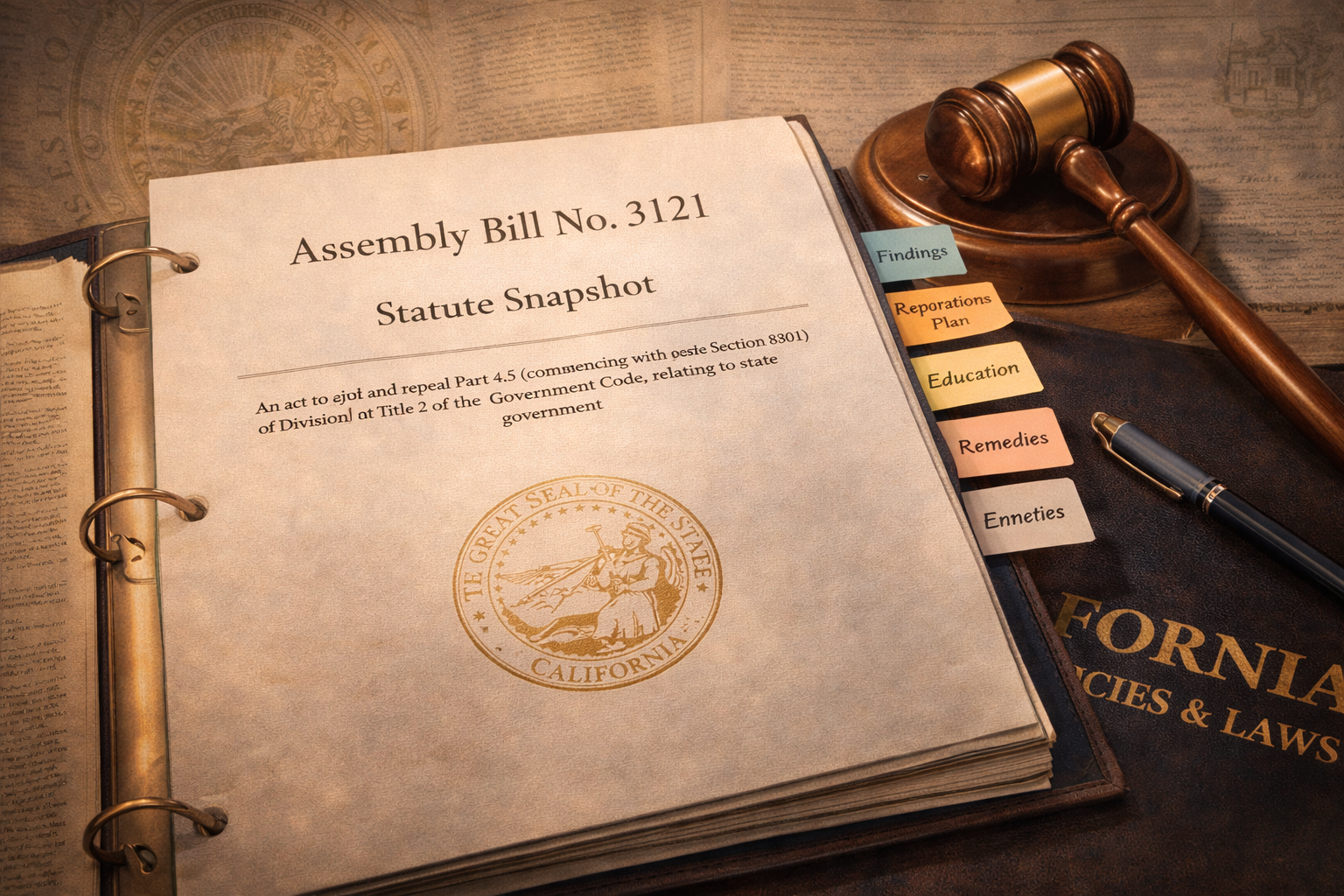
Assembly Bill 3121 Statute Snapshot
Enacted: September 30, 2020
Task Force: Nine appointed members
Final report issued: June 29, 2023
State of California Reparations Task Force Reference Materials
State of California Reparations Task Force
- AB 3121: Task Force to Study and Develop Reparation Proposals for African Americans
- The California Reparations Task Force Full Final Report
- The California Reparations Task Force Executive Summary
Further Reading
Case Example | Berkeley, CA
Berkeley Unified School District (BUSD) Reparations Task Force
Community Efforts
Berkeley Unified School District (BUSD) Reparations Task Force
BUSD’s exploration of reparations did not begin as a top-down program—it began as a community-led effort to name harm, study what repair could look like in a public school system, and push for a formal process. This work reflects Ujima in practice: residents, families, and local leaders organizing together to move an institution toward accountability.
This section highlights how community engagement translated into action: a call for a Task Force, a structured review of policy and funding considerations, and a set of recommendations presented to the School Board. The materials linked here help document that pathway and make the work trackable over time.

Key Questions
Exploring Reparations in BUSD
After the murder of George Floyd, local community members started meeting to explore the possibility of reparations in BUSD. Members included: local civic and religious leaders, BUSD families, former BUSD Board members, and BUSD staff (on their personal time). The effort included research into existing examples of reparations, discussions of policy and legal considerations. The effort culminated in a community letter signed by 100 community members on June 15, 2022 requesting that BUSD establish a Reparations Task Force.
BUSD sought to explore the establishment of a program of reparations for BUSD students with ancestors who were enslaved in the U.S. To do so, the Task Force explored and made recommendations on:
- What do reparations look like?
- How can BUSD fund reparations?
- How can and should BUSD implement such a program?
On June 12, 2024, the BUSD Reparations Task Force presented its final report and recommendations to the BUSD School Board.
BUSD Reparations Task Force Reference Materials
BUSD Reparations Task Force
Black Spaces: Reclaim & Remain
Now on view | OMCA Great Hall July 18, 2025 -March 1, 2026
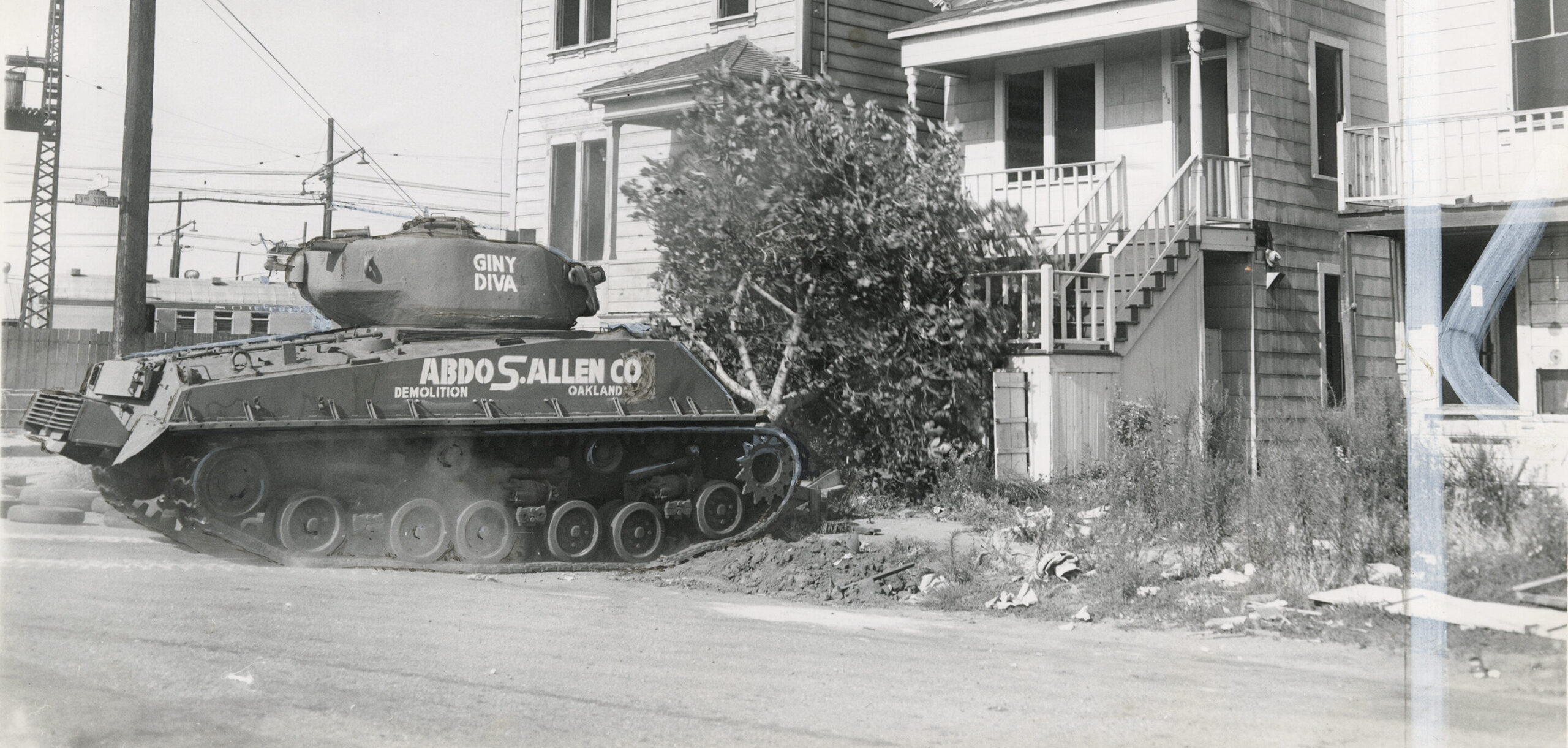
Black Spaces: Reclaim & Remain navigates the braided histories of displacement, resistance, and resilience within Black American communities in Oakland and the East Bay. Through new commissions in art, architecture, and archival research, the exhibition traces how these communities have creatively resisted dispossession and reimagined spaces of home and belonging.
Drawing inspiration from the legacies of West Oakland and Russell City, Black Spaces: Reclaim & Remain pulls from both OMCA’s permanent collection and loans from local repositories to trace the rise of these communities and their subsequent displacement.
Documents & Links
Documents
- Coming Soon
Links
- Coming Soon